8 Best Indoor Drones in 2026
Fly your own drone? Here we look at the best indoor drones and you will love our picks!
Updated for 2026 — This article has been reviewed and updated with the latest recommendations. Flying a drone indoors is a completely different experience from outdoor flying. Tight spaces, low ceilings, and furniture everywhere mean you need something small, durable, and responsive. These indoor drones are built for exactly that, whether you want to practice flying skills, rac
Updated for 2026 — This article has been reviewed and updated with the latest recommendations.
Flying a drone indoors is a completely different experience from outdoor flying. Tight spaces, low ceilings, and furniture everywhere mean you need something small, durable, and responsive. These indoor drones are built for exactly that, whether you want to practice flying skills, race through hallways, or just have fun without worrying about wind or weather.
1. DJI Neo
The DJI Neo is the standout indoor drone of 2026.
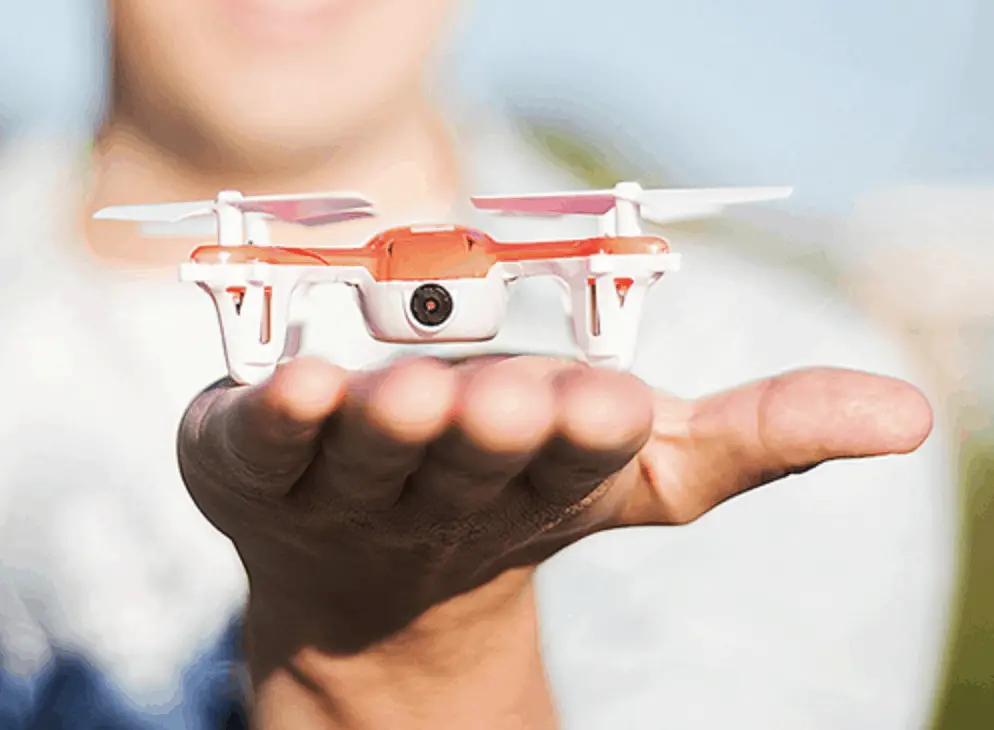
Weighing just 135 grams, it fits in your palm and has propeller guards built into the frame. The 4K camera is impressive for something this small, and the AI tracking features let it follow you around the house for hands-free vlogging. It connects directly to your phone without a controller, though the optional DJI RC-N3 adds more precise control.
Battery life runs about 18 minutes, which is generous for a micro drone.
The obstacle avoidance sensors on the bottom prevent it from crashing into floors and tables, though you will still want to be careful around hanging lights. Priced around $199, it is the best all-around indoor drone available.
2. BetaFPV Cetus X
If you want to get into FPV flying indoors, the BetaFPV Cetus X is the way to start.
The kit includes the drone, FPV goggles, and a controller for around $230. It has three flight modes: turtle mode for beginners, normal mode for intermediate pilots, and sport mode that unlocks full manual control.
The brushless motors are a significant upgrade over the original Cetus line, providing smoother throttle response and more power when you need it. The ducted propeller design means bumping into walls will not destroy the props or send the drone spiraling.
At 95mm diagonal, it is small enough to fly in a living room but stable enough for a garage or basement course.
3. Holy Stone HS210 Mini Drone
The HS210 is a no-frills, extremely affordable indoor drone that costs around $30. It is one of the best options for kids or anyone who just wants to fly something around the house without a big investment.
Three speed settings let beginners start slow and work their way up, and the altitude hold keeps it stable without constant throttle management.
You get three batteries in the box, which gives you roughly 21 minutes of total flight time. The drone is small enough that crashing into walls and furniture will not cause damage to either the drone or your belongings. No camera on this one, but honestly that keeps the price low and the weight manageable.
4. Ryze Tello (Updated 2026 Edition)
The Tello has been a popular indoor drone for years, and the 2026 edition adds Wi-Fi 6 connectivity for a much more stable video feed.
It still uses the same DJI flight controller technology that made the original so easy to fly, and the 720p camera streams smoothly to your phone. The real draw here is programmability. You can code flight patterns using Scratch or Python, making it a legitimate educational tool.
At $109, it sits in a sweet spot between the ultra-budget Holy Stone and the premium DJI Neo. Battery life is about 13 minutes per charge, and spare batteries are cheap at around $15 each.
The 80-gram weight means you can fly it in tight spaces without worrying about it punching through drywall if you lose control.
5. EMAX Tinyhawk III
The Tinyhawk III is a micro FPV racer that tops out at roughly 40 mph, which feels absolutely insane indoors. It uses a 1S battery system and weighs about 30 grams, making it nimble enough to thread through doorways and around chair legs.
The updated VTX module provides a cleaner video feed to your goggles, with less static and better range through walls.
This is not a beginner drone. You need FPV goggles and a compatible controller (sold separately), and flying something this fast indoors requires genuine skill. But for experienced pilots looking for the most fun you can have indoors, nothing else comes close. The drone itself costs about $110, though the full setup with goggles and controller runs closer to $300.
6. Potensic A20
Another budget-friendly option at around $35, the Potensic A20 is slightly more capable than the Holy Stone HS210 thanks to better gyro stabilization. The headless mode is genuinely useful indoors since you will often lose track of which direction the drone is facing. One-key takeoff and landing makes it approachable for complete beginners.
You get two batteries for about 12 minutes total flight time.
The protected propellers handle wall collisions well, and the small size means it can fly in spaces as tight as a bedroom. Like the HS210, there is no camera, but the flight performance is solid for the price.
7. DJI Avata 2
If money is not a concern and you want the most immersive indoor flying experience possible, the DJI Avata 2 with Goggles 3 is remarkable.
The motion controller lets you steer by tilting your hand, and the 4K/60fps camera produces genuinely cinematic footage. Built-in propeller guards and downward sensors make it safer indoors than a typical FPV drone.
At $999 for the full Fly More combo, this is a serious investment. It is also larger than the other drones on this list, so you need a bigger space. A small apartment will not work, but a large living room, basement, or garage is perfect.
Battery life is about 23 minutes, which is excellent for an FPV setup.
8. Syma X20 Mini Drone
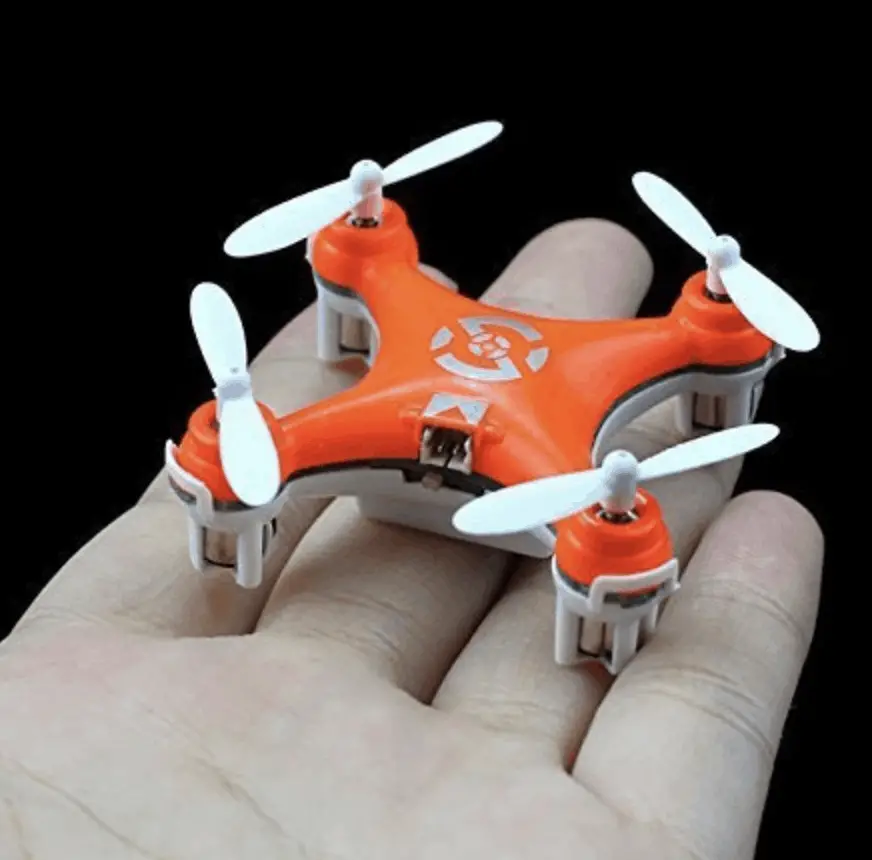
The Syma X20 rounds out this list as the cheapest option at around $20. It is a palm-sized drone with altitude hold and headless mode that flies for about 5 minutes per charge. That is not great, but at this price, it is essentially a toy that happens to fly surprisingly well.
It comes with one battery and a small controller.
The build quality is decent for the price, and the propeller guards wrap fully around each rotor. If you want to test whether indoor drone flying is something you enjoy before spending real money, the X20 is the lowest-risk way to find out.
Buying Advice
Size and weight are the most important factors for indoor drones. Anything over 250 grams can damage walls, furniture, and itself during the inevitable indoor crashes. Propeller guards are essentially mandatory. Brushless motors last longer and perform better than brushed ones, but they cost more. If you are flying in a small apartment, stick with drones under 100 grams. Larger spaces like garages or basements can handle bigger models like the DJI Avata 2.
The methodology, in full.
Every Product Rankers roundup follows the same five-step process. We publish our testing plan before we begin and update it publicly when methods change.